12 Abstinence Strategies for the Holiday Season

holiday handsThanksgiving and Christmas are bad enough for compulsive eaters. But in between them are five weeks of office parties, boxes of holiday candy, cocktail parties, and more. OA’s Steps, Tools, and Traditions are our keys to success. Here are 12 specific ideas for using them to get through the holiday season.

12. Use Step One: Remind yourself that you are powerless over food, of the pain, suffering, and unmanageability of your life when you eat compulsively. Abstinence is sweeter than any holiday confection.

11. Live One Day at a Time!: Don’t think about getting through the entire holiday season, instead focus on staying abstinent until you go to sleep tonight.

10. Sponsor and Be Sponsored: Turn to your sponsor for support and then check in with any sponsees to see how they are doing.

9. Make a 12th Step Within Call: December 12th is OA’s 12th Step Within Day. Get out of your head by calling someone you haven’t seen at a meeting lately or drop in on the 12th Step Within Day phone marathon.

8. Assess Your Abstinence: If you’re worried about whether you can make it through the season, take a look at OA’s Strong Abstinence Checklist for suggestions that are proven

7. Inventory Any Slips: If you do stray from your plan, use OA’s Been Slipping and Sliding to learn how you can avoid a future slip.

6. Ask Other Members for Help: If you don’t have a sponsor, get one. Even if you do, ask other OA members how they cope with the holidays.

5. Don’t Forget Service: At your meetings, raise your hand for any service opportunities available and do them cheerfully. Read the Promises, put away chairs, order the literature: It’s a holiday gift that you’ll want to keep on giving.

4. Take Some Quiet Time: Whether as part of your daily spiritual activities or right before a holiday get-together, take some quiet time, relax, read some program literature, and get into a frame of mind where your Higher Power can help you.

3. Make Meetings: Don’t let them slip away. If the holiday season is messing up your meeting schedule, supplement with phone meetings or online meetings. Or attend one of OA’s holiday phone marathons.

2. Talk to the Newcomer: Nothing so ensures immunity from compulsive eating as working with newcomers. Greet them warmly, make them feel welcome, and give them a buzz during the week.

And the most important support for abstinence during the holidays or anytime:

1. Trust and Rely on God: As powerless people, we must seek the power to abstain from a source greater than ourselves. Ask your Higher Power, however you define It, for ease and comfort, the willingness to avoid compulsive eating, and to focus your attention on how you can bring others good cheer during this season.

Support for Getting Through Thanksgiving

keep calm and stop eatingWhile normal eaters plan what to eat on Thanksgiving Day, we compulsive eaters plan what not to eat. And we need a Higher Power to help us turn that plan into action. That can be a tough order if we go it alone, but we have two opportunities for support here in the Seacoast.

Seacoast OA’s annual Thanksgiving Day meeting

Join us for our annual face-to-face meeting in Portsmouth for a great start to an abstinent holiday!

9:00 AM to 10:00 AM
Thanksgiving day
North Church Parrish Hall (site of Thursday evening Portsmouth meeting)
355 Spinney Road, Portsmouth (corner of Spinney and Middle Road)
Enter through back door
Contact: Eric (207) 361-7032

OA Thanksgiving Day Phone Marathon

This all-day phone marathon features hourly meetings beginning at 8:00 AM East Coast time and lasting through 12:00 midnight. These are national phone meetings so you’ll be able to enjoy hearing from members in other areas. The marathon theme is Count Your Blessings.

8:00 AM to 12:00 AM
Thanksgiving day
Call-in number: (712) 432-5200
Conference ID number: 4285115 followed by # sign

Additional holiday phone marathons will be conducted on other holidays, including:

  • Veteran’s Day (November 11th)
  • IDEA Day (OA’s International Day of Experiencing Abstinence, November 15th)
  • OA 12th Step Within Day (December 12th)
  • Chanukah (December 17th)
  • Christmas Eve Day (December 24th)
  • Christmas Day (December 25th)
  • Kwanza and Boxing Day (December 26th)
  • New Years Eve Day (December 31st)

The call-in and conference ID numbers are the same for each. For more information, including the themes of these marathons, please click here for the 2014 Holiday Marathon Schedule. This schedule will also be posted on our front page and on the Meetings page of this site.

Extra early bird special for 2015 Region 6 Convention

R6-Convention-Logo-2014-150x150Great news for Region 6 Convention goers: Tickets for the 2015 Convention are more than half off if you register online before November 11th.

Visit the Region 6 2015 site to sign up today.

If you went to last week’s Region 6 Convention in Burlington, you know how powerful being with 500+ OA members can be. The friends from away, the powerful speakers, the new faces you meet, the recovery network you can build across state lines. Everyone pulling toward the same goal: Recovery from the devastation of compulsive eating.

It’s a great way to spend a weekend in recovery!

A Video Introduction to OA

If you missed our “Freedom Isn’t Free” workshop yesterday, we missed you! It was a great recovery experience. Our leader had so many great things to say, and in our next couple of posts, we will highlight a few resources and initiatives he mentioned in passing so that we can all learn more about them.

Today, we’ll focus on the newcomer video he mentioned and how you can use it yourself whether you’re new to the program or not. The Westchester United Intergroup (WUIG) has created a video just for newcomers that we’ve made available on our Newcomers page. The point of the video is to quickly help newcomers understand exactly what the program. In fact, it’s good for OA veterans too! In about nine minutes it covers:

  • the cycle of addiction
  • some key terms of recovery
  • how to get honest about our food
  • how the Tools and Steps work
  • what to do to get started.

Click the image to watch it.

What a great way to learn about OA FAST!

For Newcomers

  • Watch the video so that you’ll understand the basics of OA.
  • Talk about it with other members, especially your sponsor.
  • Reflect on it as you read our Newcomer’s Packet.

Current Members

If you have an opportunity to 12th Step someone, this is a great way to do it. Share your membership with them, tell them your story, and if they’d like to know more, this video is a great resource for them.

Sponsors and Temporary Sponsors

Here’s three ways to use this video with someone you’re working with:

  1. Have a newcomer or sponsee watch it by themselves to learn about the program.
  2. Watch it with them and talk about it as you watch (ideal for use with a tablet device or laptop)
  3. Watch it yourself and use it as talking points for working with others or sharing at a meeting.

What Is an Intergroup, and Why Is It Like Canada Geese?

By Eric C. (Seacoast Intergroup chairperson)

Together, we can soar to new heights!

Together, we can soar to new heights!

If you’re like me, you’ve probably spent a lot of time avoiding Intergroup service. For years in program I told myself that whatever exactly it was that those Intergroup people did, it had no bearing on me—and I wasn’t a joiner anyway.

Turns out that I joined Intergroup the moment I joined OA.

It took me a few years to realize that Intergroup is all of us who attend meetings in the Seacoast! It isn’t the boss of anyone. It doesn’t dictate what meetings should do or tell members what they should do. Intergroup doesn’t govern. Trust me, the chairperson has no real power!

What Intergroups do in OA is provide support for meetings, members, and even OAs in the making. Every Intergroup’s primary purpose is to carry the message of recovery to those who still suffer. A single meeting may have trouble getting the message to a lot of people at once, but when it joins with other area meetings it can do so much more. Intergroup’s job is to facilitate those collective actions.

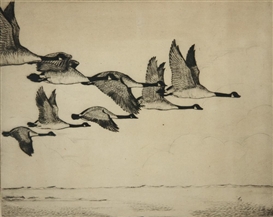
As an analogy, think of Canada Geese. Those V-formations you see when they migrate? Those huge flocks can fly 1,000 km in a day. A single goose won’t have enough stamina to get nearly so far. Even a small family of them can’t do it. But when the entire flock joins together, there’s enough geese that they can each take turns flying in the point of the V, sheering the wind for everyone else in the flock. In this analogy we are each a goose; our meetings are the families; Intergroup is the flock.

OK, so what actions can our Intergroup take? Our own Intergroup’s Year of Abstinence has included:

  • Two workshops
  • A new abstinence-focused meeting
  • A new website with abstinence resources
  • A 12th Step Within campaign.

These things support all of us in some way. These actions aren’t likely to occur, however, if we don’t have an Intergroup to align our efforts. For example, the background work that went into developing the Year of Abstinence included a survey of our entire membership. Our workshops depended on our Intergroup having affiliated with OA’s Region 6, which allowed us to hear about and attend events where we made contacts that made the workshops possible. Planning, logistics, project-management, and simple business. That’s what the Intergroup is for.

Our soon-to-be-finalized strategic plan demonstrates that we can be active and creative in getting the message out. It turns out that doing service at the Intergroup level isn’t what I thought it was when I was avoiding service. It’s not about attending an extra meeting once in a while to hear what the treasury’s balance is. It’s about doing our Higher Powers’ work to help others. And we get a nice spiritual jolt for doing it!

Agenda for Upcoming “Freedom Isn’t Free” Workshop

The leader for our August 16th workshop “Freedom Isn’t Free” has kindly supplied the day’s agenda, which we’ve pasted in below. It’s very solution-oriented and looks like a powerful experience.

If you haven’t registered for the event, take a look at the agenda and see if it’s right for you. If you have, this is FYI. Please remember that we are asking for registration so that we know how many handouts to make.

Register now by email or voicemail (603) 418-4398. Please provide your name, your phone number, your email address, and what Intergroup you are from.

Enjoy!

Freedom Isn’t Free: A Walk Through the Steps

Seacoast Intergroup, August 16, 2014

 MORNING SESSION: 9:00–12:30

Step 1

  • Unmasking the killer: suicide in slow motion
  • Disease, addiction, or weakness? Whose fault?
  • Cycles, stopgap interventions (tools) and honest Plans Of Eating
  • Binge food exercise—Participants
  • Food is symptom. Physical, emotional, spiritual healing required.
  • Abstinence includes healthy body weight

Steps 2, 3

  • Signing the contract
  • Surrender is not giving up—it’s deciding to cooperate.
  • Freedom/recovery is a byproduct of accumulated actions.
  • We’re in charge of actions, God’s in charge of results.
  • If we step aside, God will step in.
  • Trust the process. The process takes time.

      ● Participant writing

BREAK: ~10:00–10:15

Steps 4, 5

  • Define who we really are and what needs changing.
  • Self-destructive attitudes, beliefs, values, emotions, behaviors.
  • Free up cabinet space by cleaning out skeletons
  • Participant writing

● Participant sharing

LUNCH: 12:30–1:30

AFTERNOON SESSION: 1:30−5:00

Steps 6, 7

  • Become who we’re intended to be.
  • We act our way into right thinking, not think our way into right acting.
  • No softer, easier way; half measures avail us nothing, not even half.
  • Recovery behaviors: Define specific instances where defect manifests itself; define the recovery behavior in each instance; begin practicing the recovery behavior to show God we’re really willing to change; inventory every day how we’re doing on practicing the recovery behavior.

      ● Participant writing

BREAK ~ 2:30–2:45

Steps 8, 9

  • Forgiveness of self and others
  • Stand up tall and take responsibility
  • Clean up the messes we made

      ● Participant writing           

Step 10

  • How was it living with me today, dealing with me, being me?
  • How did I do living in my recovery behaviors and thinking?

Step 11

  • God has given us life as a gift that we must open. It’s never too late to become all that God intended us to be….”His will for us and the power…”

Step 12

  • Living in—faith, acceptance, gratitude, love, service…calm mind, peaceful heart…
  • Use it or lose it
  • HP as expressed in 12,12,9, slogans
  • Daily disciplines
  • Life is to be lived, not endured.

Summary/Questions/Sharing—Participants

What Do You Want Seacoast OA to Look Like in the Future?

By Eric C.

Do you ever think how lucky we are to have OA in this area? Me too. And when I think about keeping it strong, I think of OA’s responsibility pledge:

“Always to extend the hand and heart of OA to all who share my compulsion; for this, I am responsible.”

We’re all in this thing together, and our 2014 Year of Abstinence has proven how powerful that togetherness can be when we’re working toward a common goal. We’re accomplishing a lot! Our new Thursday evening meeting, two workshops (register for “Freedom Isn’t Free” here!), the new website, and more.

But what happens in 2015 when a new group of intergroup officers takes over? It doesn’t have to be and shouldn’t be on their shoulders alone to keep the momentum going. What if, instead, all of us in Seacoast OA could find a way to suggest a direction for future intergroup officers to go in? Good news: together we can!

Together we can draft a plan that guides future intergroups’ activities toward a shared goal of a growing OA in the Seacoast, ensure it thrives, and making us as effective at possible in getting the word out about recovery. Remember the survey we did last autumn? It’s a basis for planning ahead. The survey told us that abstinence was the number one thing our members want help with. But it wasn’t the only thing. They wanted more about the Steps. About sponsoring. About how to live a food-sober life. We can take that information, all the feedback we’ve gotten this year, OA’s own strategic plan, and the principles of our program to create a long-term strategic plan that supports out current groups and members and helps newcomers find the recovery they want.

Our intergroup has begun drafting just such a plan. Click here to download it for your own review. But this plan shouldn’t only be from or for our officers. It’s from and for all of us. That’s why we need your input—because it’s your intergroup.

This is really important stuff, and it’s great service too. I know it sounds abstract, that words like “Strategic Plan” aren’t sexy. Especially when we’re taking things one day at a time! But as many a sponsor says: Failing to plan is planning to fail. We need your help. Here’s what we’re asking you and your home group to do.

1.)   Schedule your August business meeting or a special ad hoc meeting before the August 9th Seacoast Intergroup meeting.

2.)   Before that, download and review the draft of the Strategic Plan, think about it from the point of view of your own recovery, from the perspective of a newcomer, and from the perspective of an intergroup officer attempting to bring that plan to life.

3.)   At that next home-group business meeting, discuss and give your collective feedback to your intergroup representative. They will bring those thoughts to the next intergroup meeting. (If you don’t have an intergroup rep, please elect one, or send someone in a temporary capacity on August 9th.)

4.)   If you have additional feedback you’d like to provide the intergroup with, attend the August 9th meeting or speak with one of the officers before then (Eric C., Chris M., Madeleine J., Robbie L., or Nancy K.).

Together, we will provide future intergroup officers with direction to match our primary purpose. It is not up to one of us but to all of us to help our own recoveries and others’ by making our intergroup as effective as possible at carrying the OA message.

Thank you for your service!

What Seacoast Intergroup learned from our June 1st workshop

Experience is the best teacher. This is true in all of life, let alone in recovery. We don’t know what we don’t know until we know, don’t you know.

Our first workshop on June 1st was a success with more than 50 attendees coming together from all over northern New England. At yesterday’s Seacoast Intergroup meeting, we reviewed the day and the feedback of our participants. Thanks to everyone who took time to respond, as a result we have actionable ideas for making the experience our August 16th workshop better.

Here’s four things we learned about hosting a successful workshop:

1. Our intergroup needs to do a better job of communicating what the workshop is about.

Attendees felt confused because the information we provided didn’t match the content as well as it could have. Some were disappointed as a result.

ACTION ITEM: For our August 16th workshop, we’re going to provide the presenter’s agenda ahead of time on this site. This way members already signed up will have a stronger sense of what to expect, and those still considering attending will have more information to help make up their mind.

2. The more chances attendees have for active participation the better.

Our feedback indicated that participants wanted more chances to share. A highlight for many of our responders was the opportunity to hear how other members and their meetings worked the Traditions.

ACTION ITEM: We’ll be relaying this feedback to our August 16th presenter so that they are aware of our attendees’ feedback.

3. Make sure the air-conditioning works.

This was an unexpected development! Luckily our organizing committee came up with solutions to help. In addition, our August 16th workshop will be held in a bigger room, which should alleviate some of the stuffiness.

ACTION ITEM: Make sure our facility contact has the A/C on and can help us in a pinch.

4. Our area members are an amazing resource and really stepped up to provide service for this event!

In addition to the wonderful work of our organizing committee, numerous members arrived early to do day-of service such as moving furniture, taking registrations, setting up fans, greeting arriving members, and putting out all the little fires that happen at any live event. This is wonderful 12th Step work.

ACTION ITEM: More hugs, handshakes, and thank yous!

We’re excited that our first workshop went off so smoothly, and we are doubly excited to see how much value we can bring to attendees’ personal recoveries in August. If you’d like to contribute service to that day or have ideas on how we can improve the experience, please drop a line.

Food addict or compulsive eater?

Hi, I’m _______, and I’m a _______. That’s a staple of 12-Step culture. It’s one of the ways we remain equals in our meetings and put principles before personalities. In some fellowships, the second blank probably doesn’t have much variation: alcoholic for example. OA is a little different in this way because there are as many food compulsions as there are members. Here are a few of the many self-descriptions that members in our area and elsewhere use:

  • Compulsive overeater
  • Compulsive eater
  • Food addict
  • Compulsive eater and food addict (or vise verse)
  • Binge eater
  • Sugar addict
  • Sugar and flour addict
  • Anorexic
  • Bulimic
  • Exercise bulimic.

It doesn’t matter what we call ourselves, we still get to be members as long as we have a desire to stop eating compulsively. The important thing is that we are in a meeting, seeking a solution, and no longer in denial about what our problem is. There are as many names for this disease as there are members. No matter what we call ourselves, we all belong, we can all be loved unconditionally by this fellowship, and we can all find a path to abstinence that meets our own personal needs if we keep coming back. That’s what OA’s new Unity in Diversity Checklist is all about. In OA we’re all the same, yet we’re all different. It’s what gives us strength and the ability to help members with a wide range of compulsive food behaviors. The Unity in Diversity Checklist is now linked on our Meetings Resources page.

3 great things heard at Sunday’s workshop

Thank you to everyone who attended our first workshop this weekend! And thank you especially to Chris and her crew for a smooth-running event.

We have a lonely, isolating, killing disease. Being with others who share it and have found a solution or are working toward it makes all the difference. The proof was simply being in a room with fifty-one compulsive eaters in it.

Here’s three great nuggets from Sunday:

  1. We have a fellowship that supports us and a program that changes us
  2. BINGE = Believing I’m Not Good Enough
  3. HUGS = Have yoU Given Service?

For those able to attend, we will be asking for your feedback so that we can improve your experience at our August 16th workshop “Freedom Isn’t Free.” For those unable to attend, we hope you’ll join us in August!